domingo, 31 de outubro de 2010

Frank Sinatra - My way


MY WAY

And now, the end is near,
And so I face the final curtain.
My friends, I'll say it clear;
I'll state my case of which I'm certain.

I've lived a life that's full -
I've travelled each and every highway.
And more, much more than this,
I did it my way.

Regrets? I've had a few,
But then again, too few to mention.
I did what I had to do
And saw it through without exemption.

I planned each charted course -
Each careful step along the byway,
And more, much more than this,
I did it my way.

Yes, there were times, I'm sure you knew,
When I bit off more than I could chew,
But through it all, when there was doubt,
I ate it up and spit it out.
I faced it all and I stood tall
And did it my way.

I've loved, I've laughed and cried,
I've had my fill - my share of losing.
And now, as tears subside,
I find it all so amusing.

To think I did all that,
And may I say, not in a shy way -
Oh no. Oh no, not me.
I did it my way.

For what is a man? What has he got?
If not himself - Then he has naught.
To say the things he truly feels
And not the words of one who kneels.
The record shows I took the blows
And did it my way.

Yes, it was my way.

sábado, 30 de outubro de 2010

Lounge du Monde


AQUI ICI HERE

01 Cosmos Sound Club - Les Chrysanthemes
02 Major Boys ft Aurelia - Sous le soleil
03 Marsicano - Eter
04 Ekova - Straight in Daden
05 Cesária Évora - Carnaval de São Vicente
06 Nickodemus - Desert dancer
07 Mari Boine - Gula Gula
08 Dzihan & Kamien - Streets os Istanbul
09 St Germain - Sure thing
10 Opium - Jade Or
11 Mo´Horizons - Foto viva
12 Prem Joshua - Funky guru

"Nickodemus - Desert dancer"

quarta-feira, 20 de outubro de 2010

John White Alexander

Alethea

John White Alexander (7 October 1856 – 31 May 1915) was an American portrait, figure, and decorative painter and illustrator.
He was born in Allegheny, Pennsylvania, now a part of Pittsburgh, Pennsylvania. Orphaned in infancy, he was reared by his grandparents and at the age of 12 became a telegraph boy in Pittsburgh. His talent at drawing attracted the attention of one of his employers, who assisted him to develop them. He moved to New York at the age of eighteen and worked in an office at Harper's Weekly, where he was an illustrator and political cartoonist. After an apprenticeship of three years, he travelled to Munich for his first formal training. Owing to the lack of funds, he removed to the village of Polling, Bavaria. He travelled to Venice and then he continued his studies in Florence, the Netherlands, and Paris.
In 1881 he returned to New York and speedily achieved great success in portraiture. His first exhibition in the Paris Salon of 1893 was a brilliant success and was followed by his immediate election to the Société Nationale des Beaux Arts.
John White Alexander died in New York on 31 May 1915.
Many of his paintings are in museums and public places in the United States and in Europe, including the Metropolitan Museum of Art, the Brooklyn Art Museum, the Los Angeles County Museum of Art, the Museum of Fine Arts, Boston, the Butler Institute, and the Library of Congress in Washington D.C. In addition, in the entrance hall to the Art Museum of the Carnegie Institute in Pittsburgh, a series of Alexander's murals entitled "Apotheosis of Pittsburgh" (1905–1907) covers the walls of the three-storey atrium area.

Isabella and the Pot of Basil, Museum of Fine Arts, Boston,  USA

Il commença sa carrière en 1875 comme illustrateur au Harper's Weekly avant de partir pour l'Europe (1877), Il se lia avec Whistler, dont l'influence sur son style est manifesté.
C'est alors en effet qu'Alexander évolue d'une matière épaisse, empâtée, vers une touche plus fine et une couleur plus étale. De retour aux États-Unis en 1881, il continua à travailler pour le Harper's, et devint parallèlement un portraitiste renommé).
Il habita Paris de 1890 à 1901, fréquentant Rodin, H. James, O. Wilde ou Mirbeau, et y fut en contact avec le Symbolisme et l'Art nouveau. 

Panel for Music Room, Detroit Institute of Arts, Michigan, USA


John White Alexander (1856 - 1915)

terça-feira, 12 de outubro de 2010

Dead Can Dance - A Passage in Time (1998)

Compilation of this Australian band. As the title sugests, this album was a "passage in time" to let the  audience catches up with the band´s previous albuns, via selected song. The contents comes predominatly from their 2nd to 5th albuns.

AQUI ICI HERE


"The song of the Sybil"

Joan Sutherland


A cantora de ópera australiana Joan Sutherland, conhecida como "La Stupenda" por sua legião de fãs, morreu aos 83 anos na Suíça, anunciou na segunda-feira (11/10/10) sua gravadora Decca.
Sua família disse que a soprano, certa vez considerada pelo tenor italiano Luciano Pavarotti "a maior voz do século", morreu em paz nas primeiras horas do domingo depois de sofrer longamente de uma doença.
A cantora estreou nos palcos em 1951 e, ao longo de uma carreira ilustre que abrangeu 40 anos, apresentou-se em muitos dos maiores teatros de ópera do mundo.
Sua última aparição no palco foi em 31 de dezembro de 1989, no Royal Opera House de Londres, cantando "Die Fledermaus" ao lado de Pavarotti.
Depois de se aposentar dos palcos, ela continuou ativa, ensinando cantores mais jovens, e se tornou presença constante em júris de concursos de cantores em todo o mundo.

Joan Sutherland , en français.

domingo, 10 de outubro de 2010

MARRS - Pump Up The Volume

Três versões de um clássico das pistas.
AQUI ICI HERE

01 Pump up the volume - Extended version
02 Pump up the volume - Radio edit
03 Pump up the volume - Rare version


"Rare version"

domingo, 3 de outubro de 2010

OSCAR - 1935

MELHOR FILME
MUNITY ON THE BOUNTY


Mutiny on the Bounty (O Grande Motim) é um filme estadunidense de 1935, do gênero drama, dirigido por Frank Lloyd, com roteiro baseado no romance homônimo de autoria de Charles Nordhoff e James Norman Hall, de 1932, por sua vez baseado num caso real.
O filme relata a história verídica, ocorrida em 1789, de Fletcher Christian, que comandou um motim no navio inglês Bounty, por não concordar com a forma severa com que seu capitão, William Blight, os comandava.
Este acontecimento provocou uma reformulação na forma como os capitães da marinha britânica passaram a comandar seus navios.
É o único filme de toda a histórias dos Oscars que os 3 atores principais foram nomeados para o título de melhor ator. Nenhum ganhou.
Charles Laughton .... capitão William Bligh
Clark Gable .... tenente Fletcher Christian
Franchot Tone .... Roger Bryan

Pour des informations en français cliquez ici .

Informations in english click here .

MELHOR ATOR
VICTOR McLAGLEN, pelo filme THE INFORMER


MELHOR ATRIZ
BETTE DAVIS, pelo filme DANGEROUS

MELHOR DIRETOR
JOHN FORD, pelo filme THE INFORMER

Cazuza - Ideologia

domingo, 26 de setembro de 2010

Moby - Best


AQUI ICI HERE
01 Why does my heart feel so bad
02 Beautiful
03 Dream about me
04 Extreme ways
05 Go
06 Honey
07 In this world
08 Natural blues
09 Porcelain
10 South side
11 We are all made out of stars
12 Wait for me
13 Extreme ways (DJ Tiestos)


"Extreme ways"

Extreme ways are back again
Extreme places I didn't know
I broke everything new again
Everything that I'd owned
I threw it out the windows, came along
Extreme ways I know move apart
The colors of my sea
Perfect color me

Extreme ways that help me
That help me out late at night
Extreme places I had gone
But never seen any light
Dirty basements, dirty noise
Dirty places coming through
Extreme worlds alone

Did you ever like it planned
I would stand in line for this
There's always room in life for this

Oh baby, oh baby
Then it fell apart, fell apart
Oh baby, oh baby
Then it fell apart, it fell apart
Oh baby, oh baby
Then it fell apart, it fell apart
Oh baby, oh baby

Like it always does, always does
Extreme songs that told me
They helped me down every night
I didn't have much to say
I didn't give up the light
I closed my eyes and closed myself
And closed my world and never opened
Up to anything

That could get me at all
I had to close down everything
I had to close down my mind
Too many things to cover me
Too much can make me blind
I've seen so much in so many places
So many heartaches, so many faces
So many dirty things
You couldn't even believe
I would stand in line for this
It's always good in life for this

Oh baby, oh baby
Then it fell apart, fell apart
Oh baby, oh baby
Then it fell apart, it fell apart
Oh baby, oh baby
Then it fell apart, it fell apart
Oh baby, oh baby
Like it always does, always does

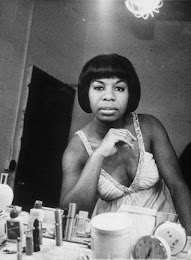
Nina Simone - Ain´t got no - I got life

domingo, 19 de setembro de 2010

Ivan Nikolaevich Kramskoy

Portrait of a woman


Portrait of the writer Leo Tolstoy


Girl with a tress

Christ in the desert - Tretyakov Gallery

Ivan Nikolaevich Kramskoi (1837 – 1887) was a Russian painter and art critic. He was the intellectual leader of the Russian democratic art movement in 1860-1880.
Kramskoi came from a poor petty-bourgeois family. From 1857 to 1863 he studied at the St. Petersburg Academy of Arts; he reacted against academic art, and he was an initiator of the "revolt of fourteen" which ended with an expulsion from the Academy of arts of its graduates.
Under the influence of ideas of the Russian revolutionary democrats Kramskoi asserted representation about a high public duty of artist, principles of realism, moral substance and a nationality of art. He created gallery of portraits of the largest Russian writers, scientific, artists and public figures in which expressive simplicity of a composition, clearness of figure emphasize the leading part of the profound psychological characteristic. Democratic sights of Kramskoi found the brightest expression in portraits of the peasants who reflected sincere riches and internal advantage of the person from people.
Kramskoi treated a religious plot in moral–philosophical plan. He gave the Christ dramatic experiences deeply psychological vital interpretation, idea of heroic self-sacrifice. One of Kramskoi’s most well known paintings is Christ in the Desert (1872, Tretyakov gallery).

Self-portrait

sábado, 18 de setembro de 2010

Gershwin

AQUI ICI HERE
01 Janis Joplin - Summertime
02 Barbra Streisand - The man I love
03 Sarah Vaughan - They can´t take that away from me
04 Nina Simone - I loves you, Porgy
05 Davina - I was doing all right
06 Ella Fitzgerald & Louis Armstrong - It ain´t necessarily so
07 Billie Holliday - Embraceable you
08 Ella Fitzgerald - I´ve got a crush on you
09 Sinead O´Connor - Someone to watch over me
10 Majestic 12 - Nice work if you can get it
11 Ella Fitzgerald - I got rhythm
12 Natalie Marchant - But not for me


"Janis Joplin - Summertime"

segunda-feira, 13 de setembro de 2010

Saturday Night Fever - Soundtrack

The Original Movie Sound Track é o disco da trilha sonora do grande sucesso do cinema, Saturday Night Fever, de 1977. O filme, e, mais particularmente, a trilha sonora, foram marcos da chamada era disco, que foi tão avassaladora quanto a era rock dos anos 50 e 60. Nos EUA, o disco ganhou disco de platina quinze vezes, ficando nas paradas de sucesso até 1980. É o 5º Disco que mais vendeu na história, segundo o Media Traffic.

01 The Bee Gees - Stayin´ alive
02 The Bee Gees - How deep is your love
03 The Bee Gees - Night fever
04 The Bee Gees - More than a woman
05 Yvonne Elliman - If I can´t have you
06 Walter Murphy - A Fifth of Beethoven
07 Tavares - More than a woman
08 The Bee Gees - You should be dancing
09 The Trammps - Disco Inferno

"Stayin´ alive"

segunda-feira, 6 de setembro de 2010

Elizeth Cardoso - Naquela mesa (1974)


Elizeth Cardoso canta "Naquela Mesa", música de Sérgio Bittencourt dedicada ao seu pai, o Jacob do Bandolim. O video foi postado a pouco tempo e é um belo documento. "...Se eu soubesse o quanto dói a vida, esta dor tão doída, não doía assim.." São versos como estes que fazem nossa música ser tão bela...

Patricia Barber - Nightclub


"Bye bye blackbird"

OSCAR - 1934

MELHOR FILME
IT HAPPENED ONE NIGHT


It Happened One Night (Aconteceu naquela noite) é um filme estadunidense de 1934, do gênero comédia romântica, dirigido por Frank Capra e com roteiro baseado em história de Samuel Hopkins Adams.
Foi o primeiro filme a conquistar as cinco categorias mais importantes do prêmio Oscar: filme, diretor, ator, atriz e roteiro.
A filha de um milionário sai de casa quando seu pai não permite que ela se case com seu pretendente playboy. Nessa fuga, ela encontra um jornalista sem futuro, porém charmoso, e os acontecimentos que seguem farão com que eles se aproximem. Com Clark Gable (Peter Warne) e Claudette Colbert (Ellie Andrews).
Nesse filme tem uma cena famosa na qual a atriz principal pede carona mostrando suas pernas.
Em 1996, o prêmio Oscar ganho por Clark Gable por sua atuação neste filme foi posto à venda em um leilão e o diretor Steven Spielberg, de forma anônima, comprou-o e o entregou à Academia de Artes e Ciências Cinematográficas de Los Angeles, para evitar que a estatueta fosse usada em caráter comercial.
Constance Bennett e Myrna Loy recusaram o papel de Ellie Andrews, e Claudette Colbert somente o aceitou porque o diretor Frank Capra prometeu dobrar o seu salário.
Claudette Colbert não gostou do filme e não ia participou da cerimônia de entrega do Oscar pois pretendia viajar. Porém, quando soube que havia ganho prêmio de melhor atriz, dirigiu-se rapidamente ao local vestindo a roupa com que iria viajar.

Jugé trop insolent, Peter Warne est congédié du journal qui l'emploie. Pendant ce temps, la riche Ellie Andrews, jeune fille gâtée dont le père milliardaire, Alexander Andrews, refuse qu'elle épouse l'homme de ses rêves, King Westley, s'échappe de l'emprise de son père en se sauvant du yacht dans lequel il l'avait séquestrée, pour aller rejoindre le play-boy aviateur avec qui elle s'est secrètement fiancée. Alexander lance des détectives sur les traces de sa fille mais les recherches sont infructueuses.
Peter Warne et Ellie Andrews se rencontrent dans un autocar reliant Miami à New York. D'abord attiré par le scoop et éventuellement la récompense qu'il pourrait obtenir, Peter ne quitte plus sa nouvelle compagne de voyage qui vient en outre de se faire voler tout l'argent qu'elle transportait sur elle. Faute de moyens, c'est donc en auto-stop qu'ils poursuivent, étape par étape, leur route vers New York Après maintes péripéties au cours desquelles ils doivent se faire passer pour un couple légitime et ainsi dormir dans la même chambre, seulement séparés par une couverture "le mur de Jéricho", ils finissent par s'éprendre l'un de l'autre.
Alors qu'Ellie est endormie, Peter lui fausse compagnie pour aller vendre son histoire au journal et ainsi tenter d'arracher de l'argent à son rédacteur en chef qui lui permettrait d'épouser Ellie. Dépitée, se croyant trahie, cette dernière retourne chez son père qui accepte enfin qu'elle se marie avec King Westley. Toutefois, au dernier moment, Ellie comprend qu'elle ne pourra vivre sans Peter. Elle abandonne alors l'aviateur et le mur de Jéricho s'effondre...

It Happened One Night is a 1934 American comedy film with elements of screwball comedy directed by Frank Capra, in which a pampered socialite (Claudette Colbert) tries to get out from under her father's thumb, and falls in love with a roguish reporter (Clark Gable). The plot was based on the story Night Bus by Samuel Hopkins Adams, which provided the shooting title. 
The film was the first to win all five major Academy Awards (Best Picture, Director, Actor, Actress, and Screenplay), a feat that would not be matched until One Flew Over the Cuckoo's Nest (1975) and later by The Silence of the Lambs (1991). It was remade as a 1956 musical comedy, You Can't Run Away from It, starring Jack Lemmon and June Allyson.
Spoiled heiress Ellen "Ellie" Andrews (Claudette Colbert) marries fortune-hunter "King" Westley (Jameson Thomas) against the wishes of her extremely wealthy father (Walter Connolly). He retrieves his daughter before the marriage can be consummated, but then she runs away. Boarding a bus to New York City, she meets fellow passenger Peter Warne (Clark Gable), an out-of-work newspaper reporter. He recognizes her and gives her a choice: if she will give him an exclusive on her story he will help her reunite with Westley. If not he will tell her father where she is and collect the reward. Ellie agrees to the first choice.
When they have to hitchhike, Peter claims to be an expert on the subject. When nothing he tries works, out of frustration, he eventually ends up thumbing his nose at passing cars. The sheltered Ellie then shows him how it's done. She stops the next car dead in its tracks by lifting up her skirt and showing off a shapely leg.
One night, when they are nearing the end of their journey, Peter leaves to make some arrangements. The owners of the motel in which they are staying see that his car is gone and assume he has left without paying. They rouse Ellie out of bed and kick her out. Believing Peter has deserted her, Ellie calls her father, who is so relieved to get her back that he agrees to let her have her way. Ellie has fallen in love with Peter, but she thinks he betrayed her for the reward money, so she agrees to have a second, formal wedding with Westley. Meanwhile, Peter believes he is the one who has been double-crossed.
Peter gets in touch with Ellie's father to settle up. Mr. Andrews offers him the large reward promised, but Peter will have none of it. He just wants to be paid $39.60 for the expenses incurred on the trip. Intrigued, the father badgers the reporter until he gets the truth: Peter loves Ellie (though he thinks he is out of his mind to do so). Peter leaves with the check he asked for.
While walking his daughter down the aisle, Andrews tells her what he has found out and encourages her to run off again, telling her there is a car waiting for her out back; at the very last moment, when asked whether she takes this man, she escapes again. Her father pays Westley to have the marriage annulled, enabling Ellie to marry Peter.

MELHOR ATOR
CLARK GABLE, pelo filme IT HAPPENED ONE NIGHT

MELHOR ATRIZ
CLAUDETTE COLBERT, pelo filme IT HAPPENED ONE NIGHT

MELHOR DIRETOR
FRANK CAPRA, pelo filme IT HAPPENED ONE NIGHT

segunda-feira, 30 de agosto de 2010

Mukta - Indian Sitar and World Jazz


Informação sobre o grupo AQUI
Information sur le group ICI
Information about the group HERE

01 Portrait
02 Frisson
03 Ngc224
04 Bindi
05 Hier Matin
06 Gange-Jah Dance
07 Nocturne


"Bindi"

segunda-feira, 23 de agosto de 2010

Classical Barbra

Aqui está algo que talvez você possa não ter escutado.

Ici il y a une chose que peut-être vous pouvez ne pas avoir encore écoutée.

Here´s something you may not have heard.

quarta-feira, 18 de agosto de 2010

Hans Baldung


                                                              Adão e Eva
                                                    Galleria degli Uffizi, Firenze

Hans Baldung, também conhecido como Baldung Grien, em razão de sua preferência pela cor verde,  (Schwäbisch Gmünd, 1484 ou 1485 — Strasburg, setembro de 1545) foi um famoso pintor alemão do Renascimento.
Viveu na sua cidade natal até 1502, quando se mudou para Nuremberg, onde trabalhou no ateliê de Albrecht Dürer, tendo permanecido aí cinco anos, o que muito o influenciou nas suas obras.
Em 1509 mudou-se, novamente, para Strasburg, onde entra em contacto com os círculos intelectuais de Martinho Lutero. Porém, entre 1512 e 1517, passou a residir em Fribourg, trabalhando na sua obra-prima, o altar da catedral.
Apesar de realizar uma boa produção religiosa, a sua temática favorita era macabra, sendo a morte e o erotismo contantes em toda a sua obra. Atualmente, algumas das suas obras estão expostas no Museu do Prado em Madrid.


Hans Baldung, dit Grien (en raison de sa prédilection pour la couleur verte), est un peintre, dessinateur et graveur allemand de la Renaissance. Il est né à Weyersheim près de Strasbourg, où son père était fonctionnaire du prince-évêque,en 1484 ou 1485 et mort à Strasbourg en septembre 1545. 
Son père ayant depuis 1492 la charge de conseiller juridique de l'évêque de Strasbourg (Albert de Bavière) et sa famille habitant dans cette ville, le jeune Hans Baldung y fit son apprentissage, auprès d'un artiste demeuré inconnu. Il perfectionna son art dans l'atelier d'Albrecht Dürer à Nuremberg entre 1503 et 1507, puis passa l'essentiel de sa vie à Strasbourg, hormis un séjour à Fribourg-en-Brisgau en 1513-1516 où il réalisa entre autres le retable de la cathédrale. Plusieurs de ses tableaux allégoriques sont énigmatiques et ont fait l'objet de réattributions et de changements de titres au cours de l'histoire.


Adão
Museum of Fine Arts, Budapest

Eva
Museum of Fine Arts, Budapest

Adão e Eva
Museu Thyssen - Bornemisza, Madrid

Hans Baldung, called Grien, one of the greatest upper German painters, printmakers and copperplate engravers was born in Schwäbisch-Gmünd in 1470. A short time after his birth, his parents moved to Strasbourg, where Baldung spent his time as an apprentice under a Strasbourg master. In 1503 he went to Nuremberg, where he worked as journeyman and favorite student of Albrecht Dürer. After successfully completing his time as an apprentice, Baldung returned to Strasbourg, where he received the citizenship in 1509.
During the subsequent years Hans Baldung worked in Strasbourg, Switzerland, Alsace and Freiburg in Breisgau as a painter and copperplate engraver. He produced his most important work, the large high altar of the cathedral of Freiburg between 1512 and 1516.
Alongside this high altar, about 100 further paintings by Hans Baldung survive, which show him as a master, who understands how to take completely new paths of coloration and lend the traditional motifs of his pictures idyllic, fairytale-like and sometimes demonic character. His female figures often appear as seductive allegories.
In 1553 Baldung returned to Strasbourg, where he was appointed court painter and member of the High Council. In September 1545 Baldung died in Strasbourg, a wealthy and highly acclaimed man.
Hans Baldung is one of the most important painters and printmakers and, second only to Albrecht Dürer and Hans Holbein, is one of the most productive artists of the 16th century.

Hans Baldung, Self-Portrait

sexta-feira, 13 de agosto de 2010

Bollywood nas Olimpíadas de Inverno - Vancouver 2010


No último dia 20 de fevereiro de 2010, durante os Jogos Olímpicos de Inverno de Vancouver, no Canadá, a competição de dança no gelo contou com uma dupla que dançou músicas de Bollywood. O casal estadunidense Meryl Davis e Charlie White encantaram o público e o júri dançando uma sequência de três músicas bem conhecidas de nós: Kajra Re, do filme Bunty Aur Babli, Silsila Ye Chaahat Ka e Dola Re Dola, ambas do filme Devdas. Eles não só primaram na sincronia e nos detalhes técnicos, como conquistaram a todos com seus sorrisos e leveza dos passos. Acabaram ficando em segundo lugar, dentre 23 casais.

quarta-feira, 11 de agosto de 2010

U2 - The Joshua Tree (1987)


The Joshua Tree foi a confirmação de U2 a nível mundial; foi um êxito de vendas e de crítica. Além disso, ganhou o prêmio "Album of the year", no Grammy Awards (1988) e se converteu num dos álbuns mais vendidos de todos os tempos.

Aqui Ici Here

01 Where the streets have no name
02 I still haven´t found what I´m looking for
03 With or without you
04 Bullet the blue sky
05 Running to stand still
06 Red hill mining town
07 In God´s country
08 Trip through your wires
09 One tree hill
10 Exit
11 Mothers of the disappeared
12 October
13 Sunday bloody sunday


"I still haven´t found what I´m looking for"

domingo, 8 de agosto de 2010

Meu pai

Hoje, dias dos pais, uma foto dele ao lado de sua amada, minha mãe.

quinta-feira, 5 de agosto de 2010

Opera Goes to the Movies


Aqui Ici Here
01 Madama Butterfly - Un bel di (Fatal Attraction) - Leontyne Price
02 Turandot - Nessun dorma (The Witches of Eastwick) - Jussi Bjoerling
03 La Bohème - Quando m´en vo (Moonstruck) - Anna Moffo
04 La Bohème - Donde lieta usci (Moonstruck) - Leontyne Price
05 The Barber of Seville - Una voce poco fa (Dark Eyes) - Roberta Peters
06 Die Walkure - Ride of the Valkyries (Apocalypse Now) - Eugène Ormandy
07 La Forza Del Destino - Overture (Jean de Florette) - James Levine
08 The Barber of Seville - Overture (Prizzi´s Honor) - Fritz Reiner
09 Gianni Schicchi - Firenze e come un albero fiorito (A Room With a View) - Peter Seiffert
10 Gianni Schicchi - O mio bambino caro (A Room With a View) - Leontyne Price
11 La Rondine - Chi il bel sogno di Doretta (A Room With a View) - Anna Moffo
12 Cavalleria Rusticana - Intermezzo (Godfather III) - James Levine
13 Pagliacci - Vesti la biubba (The Untouchables) - Placido Domingo
14 La Wally - Ebben Ne andro lontano (Diva) - Eva Marton
15 Rigoletto - Questa o quella (Wall Street) - Alfredo Kraus
16 La Bohème - O soave fanciulla (Moonstruck) - Placido Domingo
17 Manon Lescaut - Sola, perduta, abbandonata (Hanna And Her Sisters) - Leontyne Price
18 Martha - M´appari (The Grey Fox) - Placido Domingo


"Madama Butterfly - Un bel di (Fatal Attraction) - Leontyne Price"

terça-feira, 3 de agosto de 2010

OSCAR - 1932-33

MELHOR FILME
CAVALCADE
(Vídeo não encontrado)
(Video pas trouvé)
(Video not found)

Um panorama da vida inglesa de 1899 até 1933, sob o ponto de vista do casal Jane (Diana Wynyard) e Roberto Marryot (Clive Brook). Os eventos que influenciaram suas vidas como a morte da Rainha Victoria, o naufrágio do Titanic e a Primeira Grande Guerra.

Le film est une chronique qui retrace la vie des Maryott, une famille bourgeoise de Londres, entre 1899 et 1933, caractérisée par une éducation stricte mais une certaine unité familiale, complétée par une fidélité des domestiques. La famille est témoin de grands évènements de son temps comme la guerre des Boers, le naufrage du Titanic, la mort de la reine Victoria et évidemment la Première Guerre mondiale.

Often forgotten, but very excellent 1933 Best Picture Oscar winner that stands up amazingly well after 70 years. "Cavalcade" is the near-epic tale of two British families (one set of aristocrats led by Oscar-nominee Diane Wynyard and Clive Brook and the other a set of servants led by Una O'Connor and Herbert Mundin) and their experiences from New Year's Eve 1899 to the start of 1933. As the film opens, the country is entangled in the bloody Boer War in South Africa. Queen Victoria's death soon follows and naturally the loss hits the entire country very hard. The sinking of the Titanic also effects the richer group as they lose family members on the doomed liner. Of course World War I produces a terrible situation for the two groups' children. The film progresses through the Jazzy 1920s and then we re-visit the couples in the early-1930s as they reflect on eventful, dramatic and tragic years since the start of the century. A new hope seems possible by the end (of course history would continue to be unkind as World War II would soon become a sad reality for the English), but far from certain. Frank Lloyd (Oscar-winning for his direction) crafted a vastly interesting film that is technologically strong for the time period (the Titanic sequence in particular is something to be appreciated) and very intelligent from the start. The editing techniques are revolutionary with impressive fades throughout to show the passing of time and the cinematography still holds up strong even today. One good thing about the Academy Awards is the historical significance it gives to films like "Cavalcade". True the film is not always well-known among movie enthusiasts, but that does not mean that this is not an excellent production and one of the first truly excellent movies that Hollywood would develop for the world.

MELHOR ATOR
CHARLES LAUGHTON, pelo filme THE PRIVATE LIFE OF HENRY VIII


MELHOR ATRIZ
KATHARINE HEPBURN, pelo filme MORNING GLORY

MELHOR DIRETOR
FRANK LLOYD, pelo filme CAVALCADE